Water Baptism

About Course
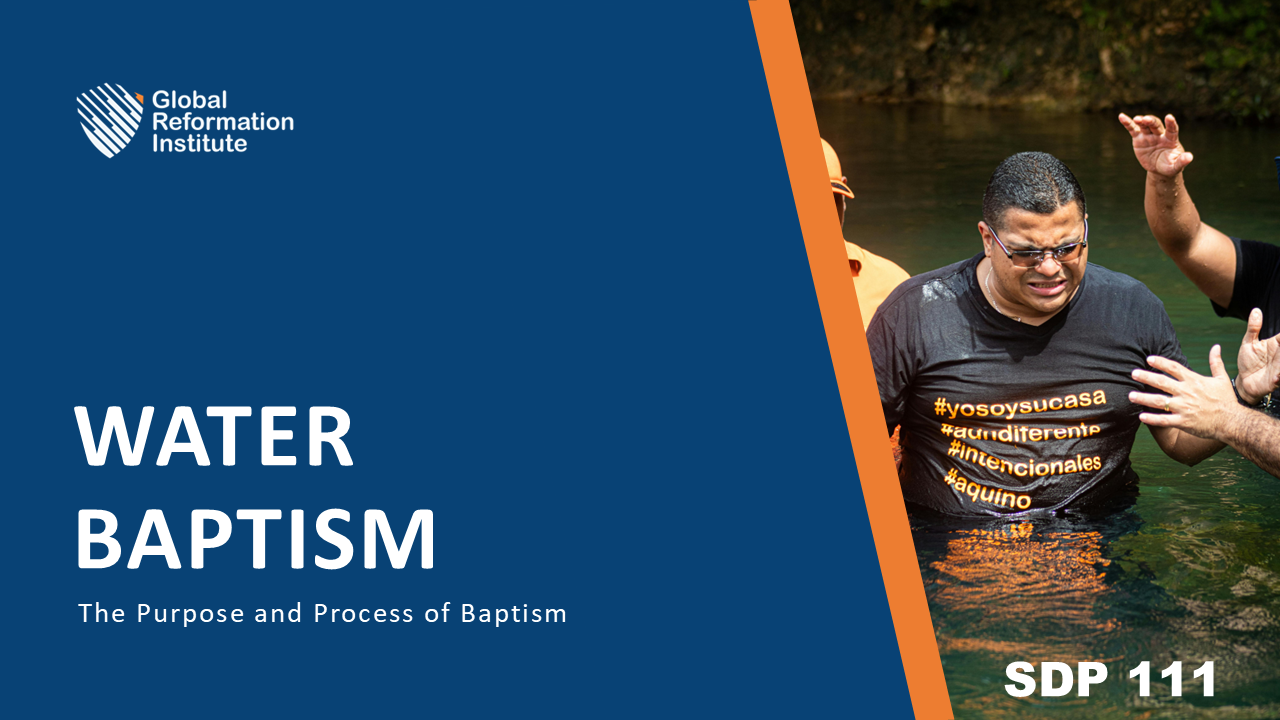
Among the core experiences of the New Covenant life, baptism occupies a foundational place in the believer’s journey. The Scriptures identify three primary baptisms under the New Covenant: baptism into Christ (which occurs at the new birth), baptism in the Holy Spirit, and water baptism. Each plays a distinct role in the life of a believer, representing a different aspect of spiritual transformation and alignment with God’s purposes. This course will focus specifically on water baptism: what it is, why it matters, and how it should be practiced according to Scripture.
Water baptism is not an optional ritual or a cultural tradition. It is a divine ordinance. Jesus Christ, though sinless, submitted Himself to water baptism to “fulfill all righteousness” (Matthew 3:15). His act established the pattern for all who would follow Him. After His resurrection, He gave clear instructions to His disciples: “Go therefore and make disciples of all nations, baptizing them in the name of the Father and of the Son and of the Holy Spirit” (Matthew 28:19). The early Church obeyed this command, consistently baptizing new believers as a public demonstration of their faith in Christ and entry into His body.
Water baptism, therefore, is not a man-made idea. It is a kingdom command with theological depth and covenantal significance. Hebrews 6:1–2 lists “the doctrine of baptisms” as one of the foundational teachings of Christ, alongside repentance, faith, resurrection, and eternal judgment. This means that understanding baptism is not advanced doctrine. It is elementary. It belongs at the very beginning of a believer’s discipleship process, forming part of their spiritual foundation.
But baptism is more than a ceremony. It is a symbolic burial and resurrection. According to Romans 6:4, “We were buried with Him through baptism into death, that just as Christ was raised from the dead… even so we also should walk in newness of life.” In other words, baptism is an outward expression of an inward reality. It declares publicly what has already occurred spiritually: that the old life has been crucified with Christ, and a new life has begun in Him.
Water baptism also signifies identification. Just as Christ was identified with humanity in His death and burial, the believer is now identified with Christ through this act. It communicates allegiance. It marks a clear line of demarcation from the old life and old associations. In the early church, water baptism was often a bold, countercultural statement that cost believers their social standing, community acceptance, and even safety. It was never meant to be casual.
In this course, you will:
- Learn the biblical basis for water baptism
- Understand its symbolic and spiritual meaning
- Explore the examples of baptism in the life of Jesus and the early Church
- Examine the prerequisites, timing, and method of proper baptism
- Discover how water baptism impacts your identity, authority, and walk with God
- Clarify common misconceptions or misuses of baptismal practice
Water baptism does not save a person; salvation comes by grace through faith (Ephesians 2:8). However, baptism is a required act of obedience for every true disciple of Christ. It is not the source of salvation, but it is a sign that salvation has taken place. It is the believer’s first act of surrender in public witness and covenantal alignment.
Let us now begin to explore the purpose and process of water baptism so we may walk in obedience, understanding, and full alignment with the King and His kingdom.
Course Content
The Vision
-
Vision
11:45
Opening Prayer
Case Study
Introduction
What water baptism is not
What is the significance and importance of water baptism?
What are the benefits of water baptism?
What are the qualifications for water baptism?
What is the biblical way for water baptism?
Discussions/assignment
Conclusion
Outroduction
Student Ratings & Reviews